Management system
Food safety policy, management commitment, document control, training, internal audits, complaint handling, corrective action and management review.
Food safety audits · Miami, FL
An independent set of eyes on your plant, your records and your people, graded against the standard you will be audited to, with a prioritized plan to close what we find.
What is a food safety gap assessment? A gap assessment compares your current programs, records and floor practices with every requirement of a target standard, such as SQF, BRCGS, PrimusGFS or FSMA, and lists what is missing or weak. It comes before system building. A mock audit comes later and simulates the real certification audit.
Juan S. VargasSQF Food Safety Auditor · Exemplar Global
Who it's for
Manufacturers and packhouses that need to know how far they are from SQF, BRCGS or PrimusGFS before committing budget and time.
Sites with a recent low score, a major non-conformity, a new QA manager or a code change such as SQF Edition 10 coming up.
Companies that need GMP or supplier audits of co-packers, warehouses and ingredient suppliers, in the U.S. or Latin America.
The problem
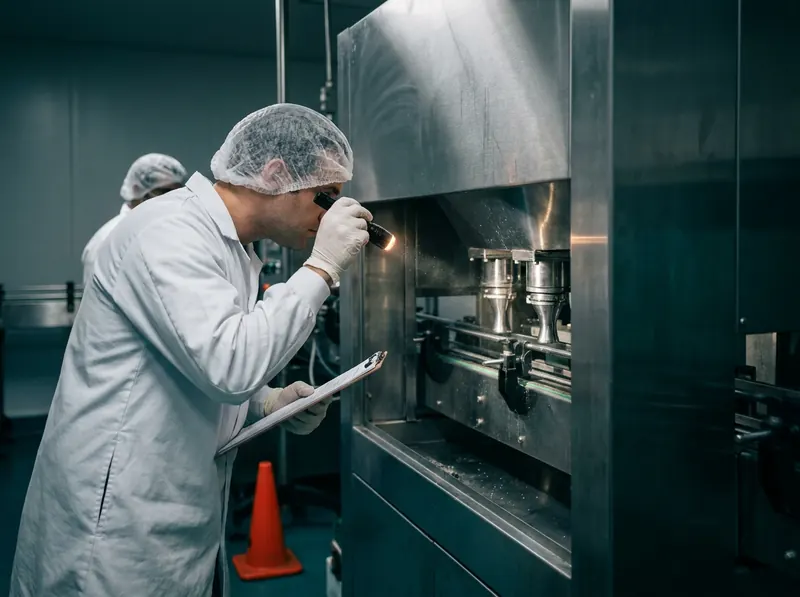
Internal teams audit what they know. They check the same logs every month and walk past the same worn gasket every day. A certification auditor arrives with the full code, no history with your plant and a limited time to sample, and that fresh view is what surfaces the findings.
The cheapest non-conformity is the one you find yourself, weeks before the auditor walks in.
The options
These four audits are often confused. They answer different questions and belong at different points in the certification cycle.
| Gap assessment | Internal audit | Mock audit | Third-party certification audit | |
|---|---|---|---|---|
| Question it answers | How far are we from the standard? | Are our programs working as written? | Would we pass the real audit today? | Do we meet the standard? |
| When | Before building or upgrading the system | Ongoing, on a schedule set by the site | Weeks before the certification audit | Initial, then recertification or surveillance |
| Who performs it | Consultant or experienced internal lead | Trained site staff, sometimes with outside help | Independent consultant, acting like the auditor | Certification body auditor |
| Output | Gap list and project plan | Findings and corrective actions | Scored report with graded findings | Audit report, score or grade, certificate decision |
| Consequence | None; it's a planning tool | Required by GFSI schemes as a program | None; it's practice | Certificate granted, maintained or withheld |
Consultants don't certify. Only an accredited certification body can issue a certificate. We can audit like one, but our reports are for your improvement, not a substitute for the certification audit.
What's included
Food safety policy, management commitment, document control, training, internal audits, complaint handling, corrective action and management review.
HACCP or FSMA preventive controls plan: hazard analysis, CCPs and preventive controls, validation, monitoring, verification and records.
GMPs, sanitation, pest control, maintenance, calibration, water, glass and brittle plastics, and personnel hygiene.
Allergen risk assessment, cross-contact controls, changeover verification and label accuracy checks.
Supplier approval, specifications, receiving checks, a trace exercise and a mock recall.
A full floor walk during production and interviews with operators, sanitation staff and supervisors, in English or Spanish.
How findings are graded
In a mock audit, we grade each finding using the terms of your target standard so the report maps directly to what the certification body will do. Most GFSI schemes grade findings in three levels.
| Grade | What it means | Typical example |
|---|---|---|
| Minor | A lapse that doesn't by itself threaten food safety or the system | One log entry missing a signature |
| Major | A system failure or a gap that could lead to a food safety risk | Allergen changeover never verified |
| Critical | An immediate food safety risk, or falsified records | Critical limits not met and product shipped |
Scores and ratings follow the scheme. SQF audits are rated E (Excellent, 96–100), G (Good, 86–95), C (Complies, 70–85) or F (Fails, under 70). BRCGS Food Safety uses grades AA, A, B, C and D, with a plus sign for unannounced audits. We report your mock result in the same format, with a clear explanation of which findings move the score most.
Every finding in our report includes the clause, the objective evidence we saw, the risk it creates and a suggested correction. That makes the report usable as a work list: your team can assign owners and dates the same day, instead of translating vague observations into actions.
How we work
We audit documents, records and the floor against every clause of your target standard, then grade each gap by risk and effort.
You receive: clause-by-clause gap report and prioritized action plan.
If you want support closing gaps, we build or fix programs with your team and train internal auditors to keep the system checked.
You receive: updated programs, internal audit schedule, training records.
A full mock audit in the format of your certification body, then support closing findings and during the real audit.
You receive: scored mock audit report, corrective action tracker.
Timing
At the start of a certification project, when a customer asks for a new standard, after a major code change, or when a new QA manager takes over and needs a baseline.
Far enough before the certification audit to close major findings and collect records showing the fixes work. Leave time; a mock audit the week before helps little.
For sites without GFSI certification, or as a periodic check between certification audits: hygiene, pest control, sanitation, maintenance and facility condition, scored against current good manufacturing practice requirements.
When approving a new co-packer or high-risk ingredient supplier, or when a supplier has complaints or recalls. We audit on your behalf in South Florida and support Latin American suppliers on-site by project.
South Florida
We perform audits on the floor, during production, in Medley, Doral, Hialeah, Miami Gardens, Fort Lauderdale and across the U.S. Plants in South Florida are inspected by FDA and, depending on the activity, by FDACS; many also carry GFSI certification. We frame findings against both regulatory and certification requirements so one visit covers both. Once gaps are known, see SQF consulting, HACCP plan development or FSMA and PCQI compliance to close them.
CASE 01 · READY-TO-EAT MANUFACTURER
42,000 sq ft · Medley, FL
14 weeks
Illustrative engagement · real client data pending authorization
FAQ
It depends on the standard, the size of the site, the number of processes and whether the visit includes production on multiple shifts. We quote a fixed scope after a 30-minute gap call.
A gap assessment is a planning tool at the start of a project: it lists what is missing. A mock audit simulates the certification audit near the end of the project: it grades findings and estimates your score in the certification body's format.
No. No one can guarantee a certification result, because the auditor samples different records and areas on audit day. A thorough mock audit reduces surprises and gives you time to fix the findings that would weigh most.
Yes. SQF, BRCGS and other GFSI-benchmarked schemes require a documented internal audit program with trained auditors and corrective actions. We can set up the program and train your internal auditors.
Yes. We audit Latin American suppliers on-site by project and support document reviews remotely, which is useful for FSVP supplier verification and buyer approval programs.
Free gap call
In 30 minutes we review your standard, your date and your most likely gaps, and tell you honestly whether you need us.
Juan S. VargasSQF Food Safety Auditor · PCQI
Request a gap call or a quote
Takes under a minute. Juan reviews every request personally.