Post signs in both languages
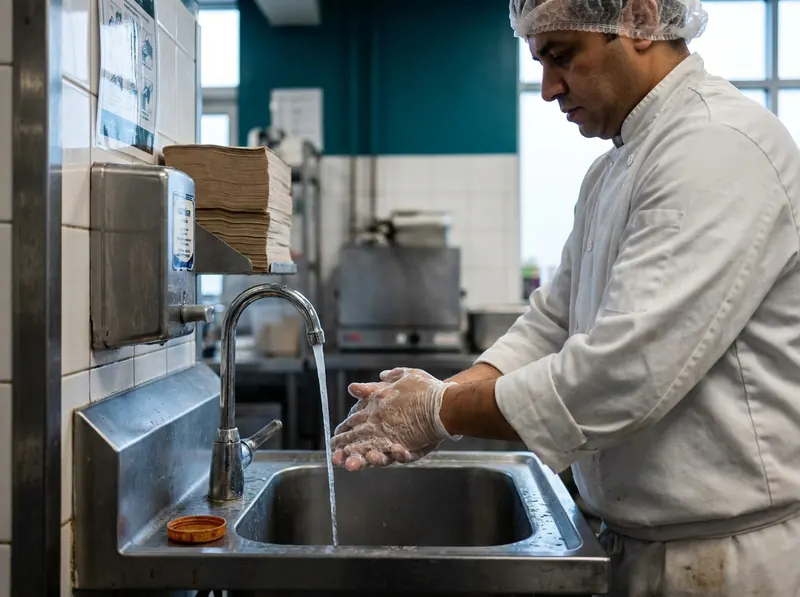
Hand-washing, sanitizer concentration and cooling steps at the point of use, in English and Spanish, with pictures where possible.
Guide · Florida DBPR inspections
How DBPR inspections work, what inspectors look at area by area, the training rules for managers and food handlers, and what happens after a violation. Written for owners and kitchen managers in Miami and across Florida.
Who inspects restaurants in Florida? The Division of Hotels and Restaurants of the Florida Department of Business and Professional Regulation (DBPR) licenses and inspects restaurants and food service establishments. Inspectors classify violations as high priority, intermediate or basic, and the most frequent problems are temperature control, hand washing, cross-contamination and pests.
Juan S. VargasSQF Food Safety Auditor · Exemplar Global
The essentials
Summary. Florida restaurants and food service establishments are licensed and inspected by DBPR's Division of Hotels and Restaurants. Inspections are generally unannounced. Violations are classified as high priority, intermediate or basic. Food service managers must be certified food protection managers within 30 days of employment, and food employees must complete approved food handler training within 60 days of hire. Food manufacturers, processors, warehouses and grocery stores are regulated by FDACS instead.
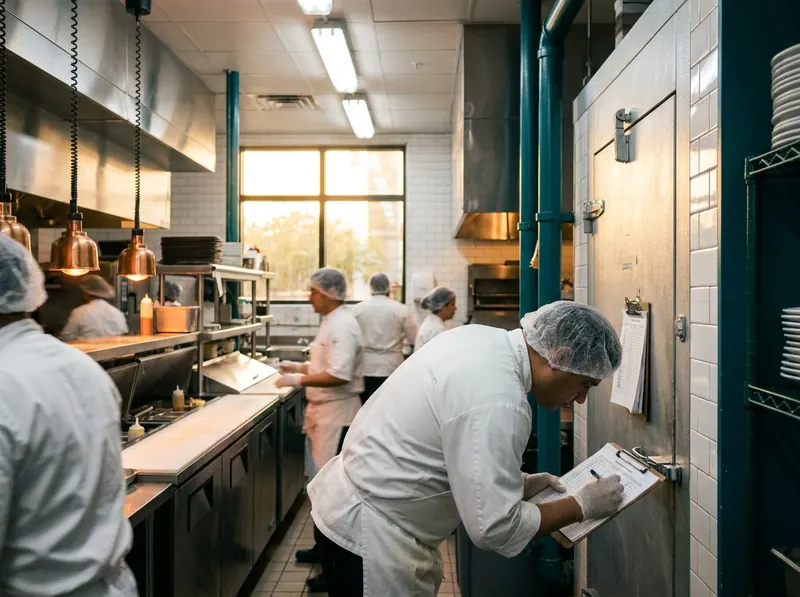
Most restaurant owners meet DBPR for the first time when an inspector walks in during service. There is no appointment to prepare for, which is the point: the kitchen should be inspection-ready every shift. The good news is that the inspection follows a predictable pattern, and the most serious violations come from a short list of habits.
| Agency | Who it regulates | Typical contact |
|---|---|---|
| DBPR, Division of Hotels and Restaurants | Restaurants, food service establishments, caterers, food trucks and similar public food service | Licensing and routine, unannounced inspections; follow-up and complaint inspections |
| FDACS, Division of Food Safety | Food manufacturers, processors, warehouses and grocery stores | Food permits and inspections of those establishments |
| FDA | FDA-registered food facilities | Federal inspections; restaurants are generally not in this group |
If your business also produces packaged food for wholesale, such as a commissary selling to other stores, check whether FDACS or FDA rules apply to that part of the operation. Our comparison of FSMA, HACCP and SQF explains the federal side.
Violation classes
Understanding the three classes helps you prioritize. A kitchen with a few basic violations and no high priority ones is in a very different position from one with a single high priority violation repeated on the callback inspection.
| Class | What it means | Typical examples |
|---|---|---|
| High priority | Conditions that could directly contribute to foodborne illness or injury | Food held at unsafe temperatures, improper cooling, bare-hand contact with ready-to-eat food, sick employees working with food, evidence of rodents or roaches, toxic chemicals stored over food |
| Intermediate | Conditions that, if not corrected, could lead to a high priority risk; often related to procedures and equipment | No working thermometer in a cooler, missing date marking, sanitizer not tested, manager certification or training records not available |
| Basic | Practices and conditions related to general sanitation, maintenance and good operations | Dirty non-food-contact surfaces, damaged floor tiles, missing light shields, employees without hair restraints |
The examples above are illustrative. The inspector's report cites the specific rule for each violation, and how a given condition is classified comes from Florida's rules and the food code they adopt. Inspection reports are public on the DBPR website, so customers and journalists can read them too.
The checklist
Walk your kitchen with this list before service, ideally with a different manager each week. Temperatures below follow the FDA Food Code, which Florida's food service rules are based on; confirm current values against the rules that apply to your license.
Training rules
Training records are one of the easiest things to get right and one of the most common things to find missing. Inspectors ask for them, and turnover means a list that was complete in January may not be complete in June.
| Requirement | Who | Deadline |
|---|---|---|
| Certified Food Protection Manager | Food service managers | Within 30 days of employment |
| Approved food handler training | Food employees | Within 60 days of hire |
After the inspection
The outcome depends on the seriousness of the violations, whether they were corrected on site, and whether they were already cited before.
Some violations can be corrected during the inspection, such as discarding food held at an unsafe temperature or moving chemicals. The report notes corrections made on site.
For violations that need more time, the inspector can issue a warning with a deadline to correct them and return for a callback inspection to verify.
If violations are serious or not corrected by the callback, DBPR can proceed with an administrative complaint, which can result in fines and other disciplinary action.
When conditions present an immediate threat to public health, such as a significant pest infestation or no hot water, DBPR can order the establishment closed until the problem is fixed and a reinspection confirms it.
After any warning, fix the root cause, not just the item. If coolers are running warm because they're overloaded or poorly maintained, a new thermometer won't pass the callback.
Make it a habit
A checklist used once before a feared inspection does little. The kitchens that do well on DBPR inspections build short checks into the normal rhythm of the week, so problems are found by a manager instead of an inspector. Assign each check to a named person and keep the completed sheets: they also show an inspector that you manage food safety actively.
| Frequency | What to check | Who usually owns it |
|---|---|---|
| Every shift | Cooler and hot-holding temperatures, hand sinks stocked, sanitizer concentration, date labels, raw-over-ready-to-eat storage | Shift lead or kitchen manager |
| Daily | Cooling logs reviewed and signed, employee health check at the start of the shift, garbage area and floors after close | Kitchen manager |
| Weekly | Full walk-through with the area checklist above, thermometer calibration, look for pest activity behind and under equipment | A certified manager, rotating if possible |
| Monthly | Training roster for new hires and expiring certificates, pest control service reports, repairs list for equipment and surfaces | General manager or owner |
| After every inspection | Review each cited item, find the root cause, update the checklist so the issue is checked going forward | Owner and kitchen manager together |
If the same violation appears in two inspections in a row, treat it as a system problem, not a staff mistake. Repeat violations tend to point to missing equipment, an unclear procedure or a training gap on one shift.
Miami kitchens
Many South Florida kitchens run in Spanish, English or both. Food safety habits stick when people learn them in the language they think in.
Hand-washing, sanitizer concentration and cooling steps at the point of use, in English and Spanish, with pictures where possible.
Temperature and cooling logs with column headings in both languages are filled in more accurately and more honestly.
The person who can explain why food goes on the bottom shelf in Spanish at 9 p.m. matters more than the certificate on the wall.
Inspectors may ask staff directly. Short drills on "What temperature should this cooler be?" build confidence in either language.
If you want an outside set of eyes before DBPR arrives, our restaurant food safety consultant in Miami service includes mock inspections, bilingual staff training and log design. For kitchens with specialized processes, see HACCP consulting.
FAQ
DBPR inspects licensed food service establishments on a routine basis, generally unannounced, and also performs callback and complaint inspections. Frequency can depend on the type of establishment and its history. Check DBPR for the current inspection policy.
A high priority violation is one that could directly contribute to foodborne illness or injury, such as improper holding temperatures, improper cooling, bare-hand contact with ready-to-eat food, or evidence of pests.
Food service managers must be certified food protection managers within 30 days of employment.
Food employees must complete approved food handler training within 60 days of hire. Keep proof of training on file for each employee.
Yes. DBPR publishes inspection results online, and they are public. Reviewing your own history is a good way to find repeat violations to prioritize.
Free gap call
In 30 minutes we review your standard, your date and your most likely gaps, and tell you honestly whether you need us.
Juan S. VargasSQF Food Safety Auditor · PCQI
Request a gap call or a quote
Takes under a minute. Juan reviews every request personally.